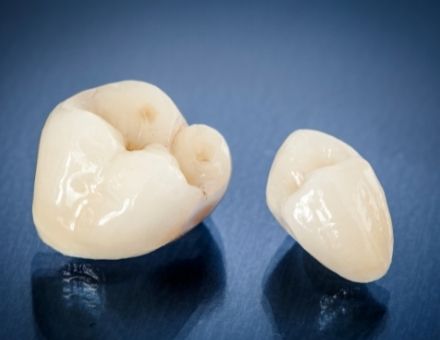
Does it take three temporary crowns to get one to stay on? I prefer not to switch dentists in the middle of treatment, but this is making me nervous. Am I overly concerned? Thanks. Alexus from NJ
Alexus,
We recognize how unsettling and inconvenient it must be when a temporary crown repeatedly comes loose. Your decision not to proceed with the final crown until you are confident in the fit shows you rightly advocate for the quality of your dental care, and we support that completely.
Why Secure Temporary Crown Well?
Ensuring your temporary crown fits well and stays securely in place is more than just a matter of convenience. It plays a critical role in protecting your underlying tooth and guiding the creation of a well-fitting permanent crown. When a temporary failure repeatedly occurs, it’s a sign that something needs careful attention before the lab makes the final restoration.
Understanding the potential reasons for this can be helpful as you consider your next steps. A temporary crown might repeatedly fall off if:
- The tooth preparation was too aggressive, leaving insufficient structure for reliable bonding.
- The impressions taken of your tooth were not completely accurate, leading to a poorly fitting temporary.
- The method or material used to cement the temporary crown was not optimal for your situation.
What Are Your Options If a Temporary Crown Keeps Falling Off?
Accurate tooth preparation and precise impressions are foundational for a successful crown. Experienced dentists meticulously check these steps, often employing digital technology to enhance accuracy. If you are unsure about the process, remember you can switch dentists during your crown treatment if you believe it’s necessary to achieve the best outcome.
Since the fit of the temporary crown often dictates the fit of the final one, resolving these issues now is essential. We encourage you to seek a second opinion from a dentist specializing in cosmetic or advanced restorative procedures. During a consultation, they can carefully evaluate your situation, discuss what might be causing the problem, and propose a clear plan to ensure your permanent crown fits comfortably, functions well, and looks great. It’s important to know that challenges with fitting a crown are usually solvable with the right expertise and should not mean that the tooth needs an extraction and implant.
Plano, Texas, female dentist Dr. Miranda Lacy sponsors this post.
