All posts by AllSmiles

Will New Dental Crowns Help My Swollen and Bleeding Gums Heal?

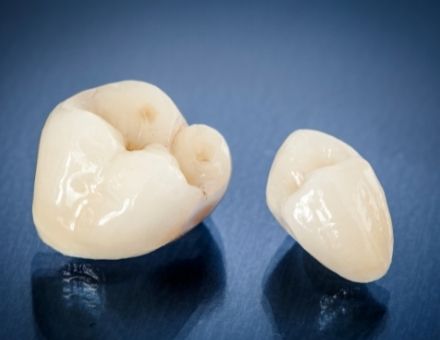
Will new dental crowns help my swollen and bleeding gums heal? After almost two years of gum swelling and bleeding with new dental crowns, my dentist removed the crowns. The lab remade the temporary crowns in April, but I have the same problem with them.

Last week, I saw a periodontist who recommended that I keep wearing the temporary crowns and not allow my dentist to have the lab make the final crowns. Duh. What is going to help my gums heal? I’m scheduled for a second opinion next week. It’s with a dentist who did a quick consultation after my dental cleaning. The dental hygienist said I had extra cement around the crowns that seemed to be irritating my gums. It’s obvious that the crowns are causing the problem, but will new crowns help my gums heal? – Thanks. Titus from OH

Titus,

Natural teeth possess specific contours that are crucial for maintaining healthy gum tissue. Ideally, a dental crown should precisely replicate these natural contours to ensure long-term gum health.

An over-contoured crown can lead to several complications for your gum health. The crown can exert excessive pressure on the surrounding gum tissue, causing irritation and inflammation. Additionally, the exaggerated bulge of an over-contoured crown creates an environment where food particles can easily become trapped, making effective cleaning challenging and fostering bacterial accumulation. These factors contribute to the development of gum disease, characterized by redness, swelling, and bleeding.

Addressing Excess Cement Around Dental Crowns

Your comment about the hygienist removing excess cement is a point of concern. The thorough removal of all excess cement by the dentist during crown placement is crucial to the quality of dental care. Incomplete removal of cement is a lapse in professional standards and can contribute to gum irritation.

Removing the excess cement and getting new dental crowns may relieve your gum irritation and bleeding. However, a second opinion from another periodontist (gum disease specialist) will determine whether you need gum disease treatment.

Check the credentials of your second-opinion dentist to ensure he or she has advanced cosmetic dentistry training. Ask to see before-and-after photos of the dentist’s cases with crowns.

Plano, Texas, female dentist Dr. Miranda Lacy sponsors this post.

A Porcelain Veneer Fell Off, So My Dentist Recommended Crowns

I needed six new crowns for my upper front teeth, and my dentist recommended porcelain veneers for the teeth behind them. The teeth are worn, so my dentist said veneers would give me a new smile and enhance my facial appearance. Three weeks after work, a veneer fell off. The dentist says she wants to replace the two veneers with crowns because I grind my teeth. She said she made a mistake recommending veneers since I grind my teeth so hard. My dentist never told me about teeth grinding until the veneers fell off. Although she bonded the veneer back on, it’s still a little loose. Do I really need crowns? Should I ask my dentist to give me a discount on the crowns since she recommended the veneers? – Thanks. Yara from NY

Yara,

A dentist’s tooth preparation or veneer bonding technique may be the cause when porcelain veneers fall out. However, either scenario may reveal that your dentist isn’t highly skilled in cosmetic dentistry. When a dentist identifies a problem after porcelain veneer placement that he or she didn’t anticipate, it is time to get a second opinion.

Generally, if you grind your teeth, you can still get porcelain veneers, but your dentist should have seen signs of teeth grinding and recommended a custom mouthguard to protect your veneers. Although your dentist suggests teeth grinding is the cause, we suspect her bonding techniques may be the reason your porcelain veneer fell off. So, get a second opinion. Replacing dental veneers with crowns will require significantly reducing healthy tooth structure on your otherwise healthy teeth.

Plano, Texas, female dentist Dr. Miranda Lacy sponsors this post.
Does It Take Three Temporary Crowns to Get One to Stay On?

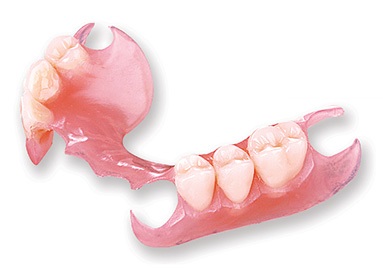
Does it take three temporary crowns to get one to stay on? I prefer not to switch dentists in the middle of treatment, but this is making me nervous. Am I overly concerned? Thanks. Alexus from NJ

Alexus,

We recognize how unsettling and inconvenient it must be when a temporary crown repeatedly comes loose. Your decision not to proceed with the final crown until you are confident in the fit shows you rightly advocate for the quality of your dental care, and we support that completely.

Why Secure Temporary Crown Well?

Ensuring your temporary crown fits well and stays securely in place is more than just a matter of convenience. It plays a critical role in protecting your underlying tooth and guiding the creation of a well-fitting permanent crown. When a temporary failure repeatedly occurs, it’s a sign that something needs careful attention before the lab makes the final restoration.

Understanding the potential reasons for this can be helpful as you consider your next steps. A temporary crown might repeatedly fall off if:

  • The tooth preparation was too aggressive, leaving insufficient structure for reliable bonding.
  • The impressions taken of your tooth were not completely accurate, leading to a poorly fitting temporary.
  • The method or material used to cement the temporary crown was not optimal for your situation.

What Are Your Options If a Temporary Crown Keeps Falling Off?

Accurate tooth preparation and precise impressions are foundational for a successful crown. Experienced dentists meticulously check these steps, often employing digital technology to enhance accuracy. If you are unsure about the process, remember you can switch dentists during your crown treatment if you believe it’s necessary to achieve the best outcome.

Since the fit of the temporary crown often dictates the fit of the final one, resolving these issues now is essential. We encourage you to seek a second opinion from a dentist specializing in cosmetic or advanced restorative procedures. During a consultation, they can carefully evaluate your situation, discuss what might be causing the problem, and propose a clear plan to ensure your permanent crown fits comfortably, functions well, and looks great. It’s important to know that challenges with fitting a crown are usually solvable with the right expertise and should not mean that the tooth needs an extraction and implant.

Plano, Texas, female dentist Dr. Miranda Lacy sponsors this post.
Why Has She Lost Two Teeth in One Day?

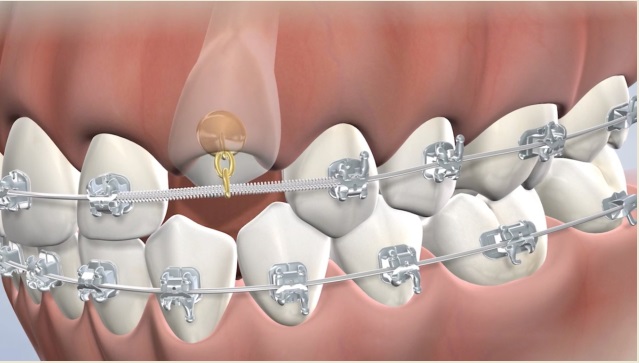
My aunt lives with me and has had dental problems for a few years. She has a partial denture for two missing lower left teeth. Last month, the dentist placed two new fillings. Last Wednesday, she lost two more teeth lower tooth on the right side of her mouth. My aunt is 76 but self-conscious. I suspect she still has gum disease, although her dentist says he treated it, and she only goes twice a year for deep cleanings. I’m unsure whether she would get a dental bridge at her age or another partial. She has a limited budget. What are her possible options? – Thanks. Akanksha from MD

Akanksha,

Your aunt needs immediate care from a gum disease specialist.

What Causes Multiple Tooth Loss?

Advanced gum diseases cause multiple tooth loss. If your aunt recently lost two more teeth, she has advanced gum disease. We recommend scheduling an appointment with a periodontist (gum disease specialist). Although her dentist may think the gum disease is controlled, tooth loss means that it’s out of control.

If your aunt’s remaining teeth are unstable and she has gum disease, a dental bridge is not an option. Natural teeth are the anchors for the replacement teeth in a dental bridge. However, the bridge puts stress on the anchor teeth, which would likely cause additional tooth loss for your aunt.

Dental implants are the ideal option for missing teeth but are too expensive for someone with a limited budget. A periodontist must evaluate your aunt’s gum and bone health to determine which tooth replacement options are best and when to place them. A Cu-Sil partial denture may be an option. However, openings in the denture allow existing teeth to poke through.

See a periodontist for gum disease treatment. A restoring dentist can collaborate with the periodontist to develop a treatment plan for replacing your aunt’s teeth at the optimal time. Meanwhile, the dentist will explain options for temporary teeth replacement.

Plano, Texas, female dentist Dr. Miranda Lacy sponsors this post.
She Uses Krazy Glue to Put Teeth Back in Their Sockets

I started using krazy glue last winter when my teeth started falling out. I regret it because of the fumes that make me sick, but I don’t know what else to do. I cannot afford a denture. I know the glue is messing up my gums. I feel stuck. Please help. – Thanks. KL

Our website administrator obtained this post from another client’s website.

Why Would Teeth Repeatedly Fall Out?

When a person has advanced gum disease or periodontitis, their teeth can repeatedly fall out without treatment. Gum disease destroys gums, teeth, and their supporting bone.

Can You Glue Teeth Back in Place?

Krazy Glue or any other high-strength glue would hold only temporarily before the teeth move again. Commercial glues are not meant for internal use and would further damage unhealthy oral tissue.

The woman who wrote about using Krazy Glue to put her teeth back felt hopeless. We included a photo on this page of a patient with advanced gum disease that is bad but not like the advanced stage that causes teeth to fall out.

In the photo below, the patient’s lower four incisor teeth are almost loose enough to fall out. Imagine tooth roots showing, teeth hanging by their ligaments, and the desperation of a person who cannot afford dentures.

It has probably been years since this woman saw a dentist. Although she cannot afford dentures, she can seek assistance from a local dental school, a dental clinic, or social services. Her teeth are unsavable, and removable dentures would make her look and feel better, improving her quality of life.

Find a dentist, a university dental school, or a dental clinic if you experience tooth loss. Avoid self-treatment.

Plano, Texas, female dentist Dr. Miranda Lacy sponsors this post.

Can Root Canals Save My Broken Front Teeth?

My center front tooth and the one behind it broke in an accident. The tooth roots are fine. Could I get a root canal on each tooth instead of a partial denture or a bridge? – Thanks. Kamryn from LA

Kamryn,

Saving a fractured front tooth through endodontic treatment (root canal), a tooth post, and crown restoration may be possible. However, several factors influence treatment success.

The extent of the fracture, your occlusion (bite), and the dentist’s preference significantly impact treatment decisions. With dental implants’ increasing reliability and popularity, some dentists may favor implant-supported restorations over saving the tooth.

The mechanics of restoring a fractured front tooth are complex. A critical consideration is the resistance to rotational forces. A tooth root’s anatomy and the placement of a single post in the tooth can lead to the post loosening over time. Some dentists insert two posts, which can enhance rotational stability.

Another crucial factor is the risk of root fracture. Rigid posts can transmit excessive force to the root’s thinner areas, increasing the fracture risk. Therefore, flexible posts, such as carbon fiber or fiberglass, are generally preferred for anterior teeth to reduce this risk.

Consult an experienced root canal dentist or an endodontist (root canal specialist) to discuss your options.

Plano, Texas, female dentist Dr. Miranda Lacy sponsors this post.
How Do I Know If My Dentist’s Diagnosis for Tooth Sensitivity Is Correct?

I have an upper left molar with a large filling sensitive to hair, heat, and cold. After an air sensitivity test, my dentist put a desensitizing get on the tooth. She said if the pain lingers, then removing the nerve would relieve the sensitivity. Is a quick air test enough to diagnose the problem? My dentist works and talks fast, so how do I know she didn’t skip a test or fail to give me details on what’s happening? What if the filling is thinning out or has a hole in it? – Thanks. Taylor K from GA

Taylor,

The cause of dental pain can sometimes be readily identified, while other times it requires further investigation.

When a tooth is sensitive to air, there may be exposed, sensitive areas on the tooth. A desensitizing bonding agent can often address this.

  • Brief discomfort that subsides quickly may suggest a reversible irritation of the tooth’s nerve.
  • Persistent pain following air exposure often signals irreversible nerve damage, necessitating root canal treatment.

Your dentist may also use cold, heat, or electrical stimulation to assess the tooth’s condition.

While it’s difficult to speculate without a thorough examination, a thinning filling is less likely to cause sensitivity. However, leakage around the filling or decay beneath it are potential culprits.

Open and honest communication with your dentist is essential. If your dentist doesn’t address your concerns, we recommend seeking a second opinion from another dental professional.

Dr. Miranda Lacy, a Plano, Texas dentist, sponsors this post.

My Six New Crowns Cause My Gums to Burn

My gums have been burning since I got new temporary crowns. After I complained, my dentist took the first set of temps off. After removing the crowns, my dentist recommended a fluoride treatment and prescribed an antibiotic.

When I got the temporary crowns, my bite was off. My dentist did so much filing on the crowns that when I drank anything, I could feel the fluid rushing beneath the crown. I got new temporaries, but my teeth are sensitive, and my gums burn. My dentist made drastic changes to my teeth, making them uncomfortable with crowns. Can I expect major rework to resolve my concerns? I’m exhausted. Thanks. Joan from AZ

Joan,

We understand our exhaustion and frustration.

Before your dentist permanently cements your new crowns, please ensure you are entirely satisfied with their fit and feel.

Confirming the specific metal alloy used is crucial if these are porcelain-fused-to-metal crowns. A potential metal allergy, particularly to nickel, could be causing the burning sensation. Request a copy of the dental laboratory’s alloy certificate for detailed composition information. Even if they are all ceramic crowns, a dentist must determine the underlying cause of the discomfort.

Several aspects of your treatment raise concerns about the dentist’s experience and judgment. A smile reconstruction is a complex procedure that often requires specialized expertise in cosmetic dentistry. Bite discrepancies and the need for significant post-treatment adjustments are red flags. Additionally, fluoride treatment on prepared teeth seems inappropriate because it cannot address bacterial infection. A more suitable approach would involve an antibacterial agent like peroxide or chlorhexidine.

We recommend seeking a second opinion from a dentist with extensive cosmetic dentistry experience and training. This will allow you to ensure optimal comfort and quality of care. A well-placed crown should feel like a healthy, natural tooth.

Dr. Miranda Lacy, a Plano, Texas dentist, sponsors this post.

Can I Get a Root Canal at Six Months Pregnant?

In early September, my dentist filled a small cavity in my top right first molar. The tooth began to hurt about three weeks later, and now my dentist says I need a root canal. However, I’m six months pregnant. Is it safe to get a root canal? – Thanks, Kaylynn from MS

Kaylynn,

While we cannot provide a definitive diagnosis without a physical examination and seeing your X-rays, based on your description, a root canal treatment may not be necessary. It is unlikely that a minor cavity would develop into deep decay in less than two months and need root canal treatment.

It’s wise to seek a second opinion from a qualified dentist to evaluate your tooth’s condition.

Regarding your pregnancy, avoiding major dental procedures during the last trimester is advisable. However, if the tooth is infected, prompt treatment is essential to protect your and your baby’s health.

If an X-ray is necessary for accurate diagnosis, wearing a lead apron can shield your abdomen from radiation exposure.

Ultimately, the decision to proceed with dental treatment during pregnancy should be made in consultation with your dentist and healthcare provider.

Dr. Miranda Lacy, a Plano, Texas dentist, sponsors this post. She makes dental care affordable.

Can an Onlay Save a Cracked Tooth?

 My dentist tried to mend my cracked tooth with bonding, but it didn’t work. Now she wants to try and onlay. Is it worth it, or should I get a crown? – Thanks. Evan

Evan

A cosmetic dentist will need to thoroughly examine your tooth and take an X-ray to accurately determine the extent of the crack.

What Is the Treatment for a Cracked Tooth?

Appropriate treatment for a cracked tooth depends on various factors, including the crack’s extent, location, and severity.

  • The extent of the crack: Cracks can range from superficial enamel cracks to deeper cracks extending into the dentin (the layer beneath the enamel) or even the pulp (the living tissue inside the tooth).
  • Location of the crack: Cracks can be either horizontal or vertical.
  • Crack or fracture: If any part of the tooth moves independently, it is considered a fracture. Prompt treatment is necessary to prevent further damage.

Can an Onlay Work Repair a Cracked Tooth?

Onlays come in various types, some suitable for most cracks while others have limitations. Gold and zirconia onlays are known for their strength and ability to withstand the biting forces of your teeth.

What Is an Onlay?

An onlay is a custom-made dental restoration, typically made from ceramic, gold, or hardened composite, that covers a significant portion or all the chewing surface of your tooth. Many advanced cosmetic dentists prefer onlays over dental crowns for specific applications. To create an onlay, your dentist will take impressions of your tooth, and a custom restoration will be fabricated to fit your tooth precisely. This procedure requires specialized skills and advanced cosmetic dentistry training.

  • Gold onlay: A gold onlay can cover the entire chewing surface of your tooth, effectively preventing the crack from spreading.
  • Porcelain or ceramic onlay: All-porcelain onlays are suitable for minor cracks that affect a tooth’s cusp or corner. However, porcelain may not be sufficiently strong to hold a molar tooth together. Zirconia, a high-strength dental ceramic, offers greater strength and durability than all-porcelain onlays. Advanced cosmetic dentists often utilize zirconia onlays to preserve teeth.
  • Hardened composite onlay: While less durable than porcelain, a hardened composite onlay may not be strong enough to protect a crack in a molar tooth.

We recommend getting a second opinion from a cosmetic dentist trained in occlusion and bite. They will explain your options for a restoration that fits well, protects your tooth, and prevents the crack from worsening.

Dr. Miranda Lacy, a Plano, Texas dentist, sponsors this post.