I had a root canal on my upper right canine almost a month ago, but the temporary filling came out. An abscess developed on the gum near that tooth. When I returned to my dentist’s office, he said I needed the root canal redone to treat the infection.
The abscess doesn’t hurt unless I press on the area. Should I be concerned about the abscess even if it isn’t painful? Would antibiotics clear the infection, or is root canal retreatment necessary? – Thanks. Marceline from ATL
Marceline,
Based on your description, a dentist or endodontist should evaluate the tooth for retreatment. The temporary filling came out, which may have allowed saliva and bacteria to contaminate the inside of the tooth.
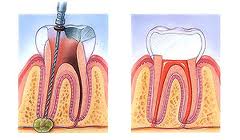
During root canal treatment, the dentist removes infected tissue and bacteria from inside the tooth and seals the root canals with filling material and cement. That seal needs protection from saliva to help prevent bacteria from getting back into the tooth.
At the end of the root canal appointment, the dentist usually places a temporary filling to protect the tooth until the final restoration is completed. Depending on the tooth and its condition, that final restoration may be a crown or, in some cases, a permanent filling.
Temporary fillings are designed to be removed easily. If one falls out and the tooth remains open, saliva can seep into the root canal filling. Over several days, bacteria may contaminate the root canal system and compromise the seal.
Can Antibiotics Clear the Infection Without Retreatment?
Antibiotics alone cannot eliminate bacteria that have contaminated the inside of a root canal tooth. Antibiotics travel through the bloodstream, but a root canal-treated tooth no longer has normal blood circulation inside the cleaned canal space.
Antibiotics may reduce an infection that has spread into the gum and surrounding bone, so swelling or an abscess may temporarily improve. However, they do not remove the source of infection inside the tooth. Once you stop the antibiotics, the infection can return if the source remains.
Unnecessary or repeated antibiotic use can also contribute to antibiotic-resistant bacteria. For these reasons, antibiotics are not a substitute for treating the source of a dental infection.
Is It Safe to Leave the Tooth Alone If It Does Not Hurt?
The absence of pain does not mean the infection is harmless or has resolved. A dental infection can remain relatively quiet while still affecting the tooth and surrounding bone.
Leaving the tooth untreated can create several concerns. Although serious complications are uncommon, dental infections can sometimes spread beyond the immediate area. An untreated tooth may also continue to deteriorate from within.
Possible consequences include:
- Continued infection around the tooth or in the jawbone
- Loss of supporting bone around the root
- Spread of infection into nearby facial spaces
- Further decay and weakening of the tooth
- Eventually reaching a point where the tooth can no longer be restored
Because this involves an upper tooth, we don’t recommend monitoring it and waiting for symptoms. A dentist or endodontist can evaluate the tooth, determine how much contamination has occurred, and advise whether root canal retreatment can preserve it.
Plano, Texas, female dentist Dr. Miranda Lacy sponsors this post. She caters to anxious patients.