All posts by AllSmiles

Crowns on My Front Teeth Are the Wrong Shape

A dentist placed four zirconia crowns on my left central incisor back and the three teeth behind it. I got the crowns from the dentist because his price was $200 cheaper per crown than the other estimates. The crowns do not match the shape of my natural teeth, and they do not look natural at all. I am anxious about dental appointments anyway, and the thought of getting this work redone scares me. Could another dentist reshape these crowns to match my teeth? Thank you. Andra from GA

Andra,

Thank you for your question. We are sorry to hear about your experience. Getting natural-looking results on crowns for front teeth is challenging, and zirconia crowns are even more difficult.

Challenges with Zirconia Crowns for Front Teeth

Some dentists with advanced cosmetic dentistry training understand how to make zirconia crowns look natural on front teeth. A cosmetic dentist can produce impressive results knowing these principles:

  • Dental labs make zirconia crowns from ceramic blocks – Dental labs mill mono-color zirconia blocks to shape them to fit over damaged natural teeth. The challenges are that a natural tooth varies in shade and translucence and achieving the right tooth shape with crowns takes a skilled dental ceramist.
  • Porcelain layers can make zirconia look natural – A ceramist must bake porcelain onto the surface and manipulate the color to match your natural teeth.

Can a Dentist Reshape Your Crowns?

Unfortunately, you will need new crowns because a dentist cannot reshape the existing ones. Ask your dentist for copies of your dental records and x-rays. Find an advanced cosmetic dentist for a consultation and exam to discuss how to correct your teeth.

Photo of female patient sitting and relaxing in a dental chair, for information on sedation dentistry from Plano female dentist, Dr. Miranda Lacy.
Ask your dentist about sedation options

After taking pictures and a mold of your teeth, a cosmetic dentist can create temporary crowns that match the characteristics of your natural teeth. If you approve the temporary crowns, your dentist will collaborate with a dental ceramist to duplicate them in high-quality ceramic. Speak with the dentist about your anxiety and sedation options to help you relax.

Dr. Miranda Lacy, a Plano, Texas dentist, sponsors this post.

Should You Choose Ultra-thin or Traditional Veneers?

Porcelain veneers transform smiles. A skilled cosmetic dentist and ceramist can manipulate porcelain to mimic the color and translucence of natural teeth. Advanced dental technology has introduced ultra-thin veneers. Which type of veneers should you choose?

Should You Choose Ultra-thin or Traditional Veneers?

Whether you choose ultra-thin or traditional veneers depends on your case, the condition of your teeth, and your dentist’s recommendations. We explain some factors that may influence your and your dentist’s decision.

Traditional Porcelain Veneers

Traditional veneers have the following characteristics:

  • About .5 millimeter thick
  • Require preparation of your natural teeth so they fit correctly and will not look bulky
  • 0.3 to 0.5 millimeters of the front surface of a tooth is removed to prepare it for a veneer

Ultra-Thin Veneers

Ultra-thin veneers have the following characteristics:

  • About .3 millimeter thick
  • Can be bonded to your teeth without preparation
  • Cosmetic dentists strive to remove a minimal amount of a tooth’s front surface

What Do Ultra-thin and Traditional Veneers Have in Common?

Ultra-thin and traditional veneers have several things in common:

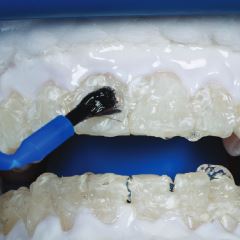
Teeth whitening application
Your cosmetic dentist can whiten your teeth before placing veneers
  • Custom-made in a dental lab
  • Match the characteristics of your natural teeth, so in the hands of a skilled cosmetic dentist, people will think your veneers are your natural teeth
  • Stain-resistant
  • Can last 15-20 years if you take diligent care of them and have them maintained by a trained cosmetic dentist

Which Should You Choose?

Schedule an appointment with a skilled cosmetic dentist. They can determine which type of veneers will give you the best results based on the condition of your teeth, the shape, position, and size of your teeth, and the results you want to achieve. You should not insist on either traditional or ultra-thin veneers. A cosmetic dentist will also preserve as much tooth structure as possible yet produce natural-looking results. The dentist will bond your veneers to ensure they look natural and are durable.

Many patients find it helpful to schedule at least two consultations before making decisions about porcelain veneers. Below are a few tips for scheduling your consultation:

  • Select experienced cosmetic dentists, preferably accredited, who have advanced, post-graduate training.
  • Look for a smile gallery on each dentist’s website and find photos of patients who received porcelain veneers.
  • Ask the dentist how many porcelain veneer cases they have completed.
  • Compare the recommendations, treatment plan, and costs of each dentist.
  • Look for patient reviews on the dentist’s work.

What Can You Expect?

After the consultation, if you are interested in porcelain veneers, you can expect the following:

  • An exam
  • Digital x-rays
  • A smile design that includes your preferences and considers your facial features to ensure natural-looking results

If you want a bright smile with porcelain veneers, your cosmetic dentist must whiten your natural teeth first. It will ensure that your veneers match the color of your teeth.

Miranda Lacy, DDS, a Plano, Texas, female dentist sponsors this post.

Can an Electric Toothbrush Loosen a Crown?

After getting teeth whitening and new crowns, I invested $150 in an electric toothbrush in July, and I think it loosened my crown. I received two crowns in May, and one is loose. I intended to take good care of my teeth and minimize cavities because I want to stay out of the dental office unless it’s necessary. But within the past two weeks, I’ve felt my crown loosening. The loose one is a crown on a post. I stopped using the toothbrush already, but are the vibrations known to loosen crowns? I wish I had asked about this before spending money on the toothbrush. Thank you. Giada B. from NJ

Giada,

Sonic vibrations in electric toothbrushes help loosen plaque, but they are not strong enough to loosen the cement from your dental crown.

Dentists use high-powered ultrasonic scalers to remove a cemented dental post from a tooth. But the tip is rigid and transfers the full strength of the vibrations wherever a dentist applies it. Even with this instrument, a dentist must press firmly on the post for an extended period to loosen a post.

The vibrations of an ultrasonic or sonic toothbrush are gentle. If your post and crown are cemented properly, the toothbrush will not loosen them. But a loose dental crown is a problem. Schedule an appointment with your dentist right away. He or she will remove your new crown and determine why it is loose.

You received your crowns in May—so they are not old or worn and should not be loose. It seems that something went wrong in the cementing process, and your dentist must stabilize your crown to prevent damage to it, your bite, and other teeth.

If your dentist can’t resolve the issue, schedule a second opinion with an advanced cosmetic dentist with training in occlusion and bite. Hopefully, it will not be long before you can enjoy your brighter smile and new crowns.

This post is sponsored by Plano, Texas, female dentist Dr. Miranda Lacy.

Should I still have intense pain after a tooth extraction?

On April 2, my dentist extracted an upper left root canal tooth that broke. She sectioned the molar into sections to make the extraction easier. Since the extraction pain somehow refers to my lower and spikes in the afternoon through the evening. The side of my face feels numb, and I feel pain in my ear. Why is the pain intense in my jaw when the upper tooth was extracted? And why is it lingering weeks after the extraction? I called my dentist, but she is prescribing pain relievers, which do not help. Should I see another dentist before my anxiety gets worse? Thank you. Alana from NY

Alana,

Although the pain you describe is not unusual after a tooth extraction, it should not linger more than a week. If you have felt pain for three weeks, something is wrong.

Lingering Pain After Tooth Extraction

Pain after tooth extraction can linger for several reasons, but a dry socket or an infection is most likely. Although Dr. Lacy would need to examine and x-ray your extraction site and the area around it, the source of pain might be near the extraction.

  • Dry socket – This painful condition results when the blood clot at the extraction site dislodges. Without the blood clot, nerves and bone are exposed, causing intense pain.
  • Infection – Bacteria can enter the extraction site and cause inflammation and pain.

Antibiotics for Lingering Pain

If you have an infection, antibiotics will help. Although the extraction was for an upper molar tooth, pain can refer to your lower law. Never pressure can cause you to feel numb.

What to expect – A dentist may begin treatment with a strong antibiotic like clindamycin and follow-up to see if you feel improvement. If you do, you should continue the antibiotic three to four days after all your symptoms are gone. But it would be best to get an examination before treatment.

Get a Second Opinion If Necessary

If you are not comfortable returning to your dentist for an examination, schedule an appointment with an experienced dentist right away. Otherwise, the infection will continue to spread—possibly affecting other teeth and putting them at risk. You can ask about sedation options to help you relax.

Sedation Options

You can ask about sedation options to help you relax. Nitrous oxide or oral sedation are two forms of sedation that may work depending on your anxiety level.

This post is sponsored by Plano, Texas, female dentist Dr. Miranda Lacy.

My gums are bleeding and I have dental anxiety

My gums bleed when I brush my teeth. I have dental anxiety and am afraid that I know I have gum disease because of canceling dental appointments for the past three years. Things are probably worse than they would usually be because I am diabetic. Now I will need sedation and deep cleanings. The thought of it is increasing my anxiety because I already have too many medical bills. How long can I expect treatment for gum disease to last? Ramón from TN

Ramón,

Thank you for your question. Dr. Lacy would need to examine your teeth and gums and take x-rays to determine the extent of your gum disease.

According to the American Academy of Periodontology, people with diabetes are more likely to have gum disease than people without diabetes for these reasons:

  • High glucose levels can contribute to tooth decay, gum disease, and gingivitis.
  •  Saliva flow in your mouth decreases when you have diabetes, causing bacteria-producing acid to linger in your mouth.
  • Germs in your mouth will travel into your bloodstream. And your body’s immune response can unleash molecules that can increase blood sugar levels.

How Gum Disease Progresses

Gingivitis, or the beginning stage of gum disease, can cause your gums to swell and bleed. It can lead to periodontitis, or advanced gum disease and cause your teeth to loosen. It can even spread to the jawbone.

  • Your dentist can check your teeth and gums more frequently.
  • Your hygienist can perform regular deep cleanings to remove plaque from your gum pockets.
  • Your dentist may prescribe fluoride rinse or prescription toothpaste that contains fluoride.
  • You may need advanced care from a periodontist (gum specialist).

How Long Will Gum Disease Treatment Take?

How long gum disease treatment takes depends on its severity and how your dentist or periodontist must treat it. You may need only a few weeks of treatment, or treatment can be spread out over a few months. After an examination, your dentist will develop a personalized treatment plan for you.

Getting Gum Disease Treatment If You Have Dental Anxiety

If you have dental anxiety, your dentist can use sedation to help you relax during gum disease treatment. Depending on your anxiety level and the care you need, your dentist will explain the options. You can ask our dentist about financing options to help you pay for dental care over time.

This post is sponsored by Plano, Texas, female dentist Dr. Miranda Lacy.

How Can I Treat Gum Disease at Home?

Although I have not seen a dentist yet, I am sure that I have gum disease. All the signs point to gum disease. I have bleeding and swollen gums and two loose teeth where the gums shrank back a little. I do not have dental insurance right now but am looking for a job that offers it. I also have dental anxiety, so I know they need to give me nitrous or something to calm me down. I’m afraid of not having enough money to meet my home expenses if I must pay for it on my own. Meanwhile, is there anything that I can do at home to slow down the damage to my gums and teeth? Thank you.  Jan from Iowa

Jan,

The signs and symptoms you described reflect advanced gum disease. When your teeth begin to loosen, you can do nothing at home to save them. And if two teeth are loose, more will probably follow.

What Happens If You Don’t Treat Gum Disease?

Untreated gum disease can threaten your long-term oral and overall health. According to the American Academy of Periodontology, as gum disease gets worse, the following issues result:

  • Chronic inflammation
  • Diseased bone that supports your teeth
  • Deep pockets between your gums and teeth
  • Teeth fall out

Preventing gum disease is not expensive. But the longer you delay, the more costly treatment will become. Your dentist will recommend deep cleanings to remove the buildup of plaque and tartar between your teeth. You may need a specialist to stop the disease from getting worse?

What If You Have Gum Disease But No Dental Insurance?

Photo of female patient sitting and relaxing in a dental chair, for information on sedation dentistry from Plano female dentist, Dr. Miranda Lacy.
Ask a dentist about making gum disease treatment and sedation affordable for you

If you have gum disease but no dental insurance, see a dentist anyway. Even if you need sedation during the treatment you need, it is worth it. Call a few dental offices in your area and ask about payment plans and how the practice can make treatment affordable for you.

Plano Texas dentist Dr. Miranda Lacy sponsors this post.
Is My New Dentist Overdoing It with X-Rays and Fluoride Treatment?

I have a new dentist and have some questions about their recommendations. Do I need x-rays every six months? Also, as an adult, do I need a yearly fluoride treatment? I want to limit treatment that I do not need frequently. Thank you. Susanna from San Francisco

Susanna,

Thank you for your questions.

How Often Do You Need Dental X-rays?

General guidelines for dental x-rays are as follows:

  • Bitewing x-rays – Yearly
  • Panographic x-ray – once every five years

However, the American Dental Association (ADA) states that your dentist may recommend x-rays more often depending on several factors, including:

  • Your age
  • Your oral health
  • Your risk for disease
  • Signs and symptoms of oral disease, including tooth decay, bone disease, or gum disease

Dental x-rays expose you to minimal radiation. Still, the ADA document, Dental Radiographs – Benefits and Safety, recommends providing a new dentist with your existing x-rays to avoid duplicating them.

How Often Do Adults Need Fluoride Treatment?

Although dentists usually give fluoride treatment to children, adults may receive treatment for aggressive decay. How often you receive fluoride depends on your condition and its severity.

Teeth whitening application
Fluoride treatment can calm lingering sensitivity from teeth whitening

Reasons that your dentist might recommend fluoride treatment

  • Advanced tooth decay
  • Lingering sensitivity from teeth bleaching
  • Minimize decay from reduced saliva flow from diseases, medications, or medical treatments.

Most dental offices use acidulated fluoride. If you have porcelain veneers or crowns, acidulated fluoride can etch the surface, roughen it, and increase the risk of our crowns or veneer staining. If the dental lab makes your porcelain restorations tinted the surface, acidulated fluoride can dissolve the tint.

And if you want your teeth whitened, ask your dentist to supervise it, help you minimize sensitivity, and avoid the need for fluoride treatment.

Will My Chipped Tooth Grow Back?

My girlfriend keeps nagging me about a chipped tooth that happened a few weeks ago. I hurt when it first happened but now only every now and then does it bother me. I think she is embarrassed by it, but it doesn’t bother me. Is this something that a dentist needs to fix, or can I leave it alone and save the money for something else?  Will a chipped tooth grow back? Thanks. Logan from SC

Logan – Thanks for choosing our office for your question.

Will a Chipped Tooth Grow Back?

A chipped tooth will not grow back. Although tooth enamel is the body’s most rigid tissue, it is not living. So, your tooth will not repair itself.

Do You Need to Have a Chipped Tooth Fixed?

Whether you need to have a chipped tooth fixed depends on the extent of the damage. A chipped tooth can worsen. Stress on the tooth from biting hard food can cause further damage. It is best to have your tooth examined by a dentist to determine if internal damage to the tooth needs treatment.

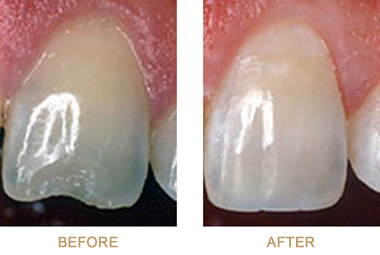
Chipped tooth before-and-after photos
Dental bonding repairs chipped teeth seamlessly

If there is no internal damage to the tooth and it is structurally sound, a dentist can repair it with dental bonding. Cosmetic dentists apply dental bonding by hand to fill in the missing space seamlessly. An experienced cosmetic dentist can manipulate bonding to match the color and translucence of your natural tooth. A dentist can complete the treatment in one visit—usually in less than an hour.

Although you are not concerned about the appearance of your tooth, at least have it examined to ensure that the damage is only cosmetic. You can find a cosmetic dentist willing to make treatment affordable for you.

Plano, Texas, female dentist Dr. Miranda Lacy sponsors this post.

Can I Trust My Dentist to Get My Crown Color Right This Time?

I fell in August and broke three upper teeth, including one front tooth. And I broke a lower front tooth. I did not like the dentist I had at the time, so I chose another dentist. I was so traumatized that they had to give me sedation even before an exam. The dentist did root canals and crowns on all my broken teeth. The crowns were the wrong color and tooth thick. Then he tried again with only slight improvement.

Now the crowns look light gray instead of almost medium gray. It is still unacceptable. The dentist said he could try again, but he does not sound confident. Also, my anxiety is increasing. Even though he sedates me, I am anxious about being sedated because I do not know how my crowns will look.  Is it worth giving my dentist another chance? Thank you. Cailia from Idaho

Caila,

Dr. Lacy would need to examine your crowns to identify the issue. Although you have not told us what types of crowns you received, you say they look gray. We guess that you have pure ceramic crowns with metal posts and cores to reinforce the insides of your broken teeth. In that case, the metal is showing through the crowns and making them look gray.

The issue is that your dentist does not know enough about cosmetic dentistry to give you crowns that fit your mouth, are not bulky and match your natural teeth.

How to Prevent Dental Crowns from Looking Gray

A dentist with advanced cosmetic dentistry training understands how to prevent ceramic crowns from looking gray. Three approaches include these steps:

Composite core

  • Perform root canal treatment
  • Insert a fiberglass post in each tooth
  • Add a composite core close to the color of your natural teeth

Metal core

  • Bond composite over the metal to block the color
  • Bond the crown over the opaque layer

Opaque the crown enough

Another alternative is to give the laboratory technician instructions about metal core color and extent and ask the tech to opaque the crown enough to conceal the metal.

Get a Second Opinion

Woman's face with her eyes closed while she receives dental work
You can relax with sedation and dentist you trust

An expert cosmetic dentist understands color manipulation and how to give you crowns that look natural. After two attempts from your dentist, we recommend that you find another dentist to replace your crowns and get them right.

Schedule a consultation first to ensure you are comfortable with the dentist. Although you probably still need sedation during crown replacement, you can have confidence that a cosmetic dentist will resolve the problems with your crowns.

Miranda Lacy, DDS of Plano, Texas, sponsors this post.

Is My Toothpaste Scratching My Veneers?

I think I misunderstood something about whitening toothpaste and porcelain veneers. My dentist gave me free teeth whitening gel and trays. I wanted to get all my natural teeth whitening before she placed veneers. After I finished whitening my teeth, I used whitening toothpaste to keep them bright. And after I got veneers, I kept using the toothpaste. But last week, at my dental appointment, the hygienist said that I could damage the veneers with the whitening toothpaste. I thought that other whitening agents do not change the color or harm veneers. Could I really scratch them with the toothpaste that I’m using to keep my natural teeth bright? – Deynah from Long Island

Deynah,

Thank you for your question.

Whitening toothpaste cannot change the colors of your veneers. But if you use them long-term, their abrasiveness might scratch the glaze on your veneers. If you have not been using the toothpaste long, do not worry about it.

What Can Scratch Porcelain Veneers?

Certain toothpastes, dental materials, and dental chemicals can damage the glaze on porcelain veneers. Some of them include:

Photo of a yellow toothbrush with toothpaste being applied to it; for information on free teeth whitening in Plano, TX
Long-term use of abrasive toothpaste can scratch porcelain veneers
  • Abrasive toothpaste
  • Abrasive polishing pastes
  • Acidulated fluoride
  • Power polishing equipment at a dental office

We recommend toothpaste made for cosmetic dental work.  Supersmile is a toothpaste brand that will remove surface stains from veneers without damaging them. Be careful about types of toothpaste within a brand that claim to be low abrasion. Read the labels for specific instructions about using the brand of toothpaste on cosmetic dentistry work. Consistently rubbing your veneers can wear away the bonding between your teeth and veneers.

You can use bleaching gel from your dentist to touch up your natural teeth and keep them bright without harming your porcelain veneers.

Miranda Lacy, DDS, a female dentist in Plano, TX, sponsors this post.